4 October 2026
What's the difference?
A shed kit is a pre-designed building sold in a set range of sizes and configurations. You choose from available options and the kit is manufactured to that standard spec. A custom shed is designed around your specific site, use and requirements rather than fitted into an existing template.
Where shed kits work well
Kits aren't a lesser option. For straightforward storage needs on a flat, uncomplicated block, a kit can be a sensible, efficient choice.
- Standard sizes suit common uses like single or double vehicle storage
- Design and ordering is generally quicker since there's less back-and-forth on specification
- Good fit for sites with no unusual access, slope, or boundary constraints
The trade-off is flexibility. If your block has an odd shape, a slope, tight access, or you need a size that falls between standard options, a kit may force compromises on layout, door placement, or usable space.
Where custom sheds make more sense
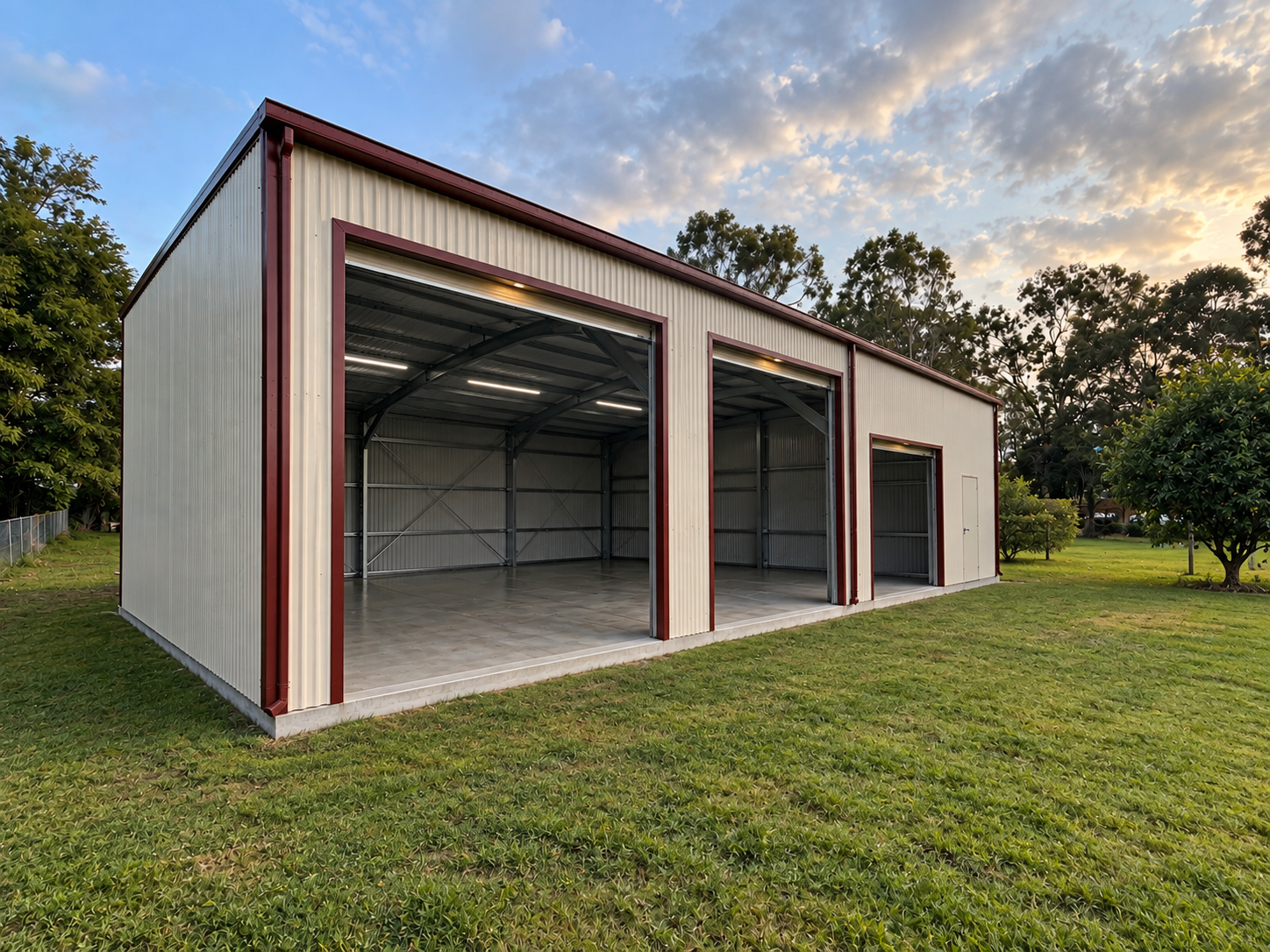
A custom shed is designed to fit the site and the brief, not the other way around. This matters when:
- Your block is sloping, irregular, or has limited access for a standard footprint
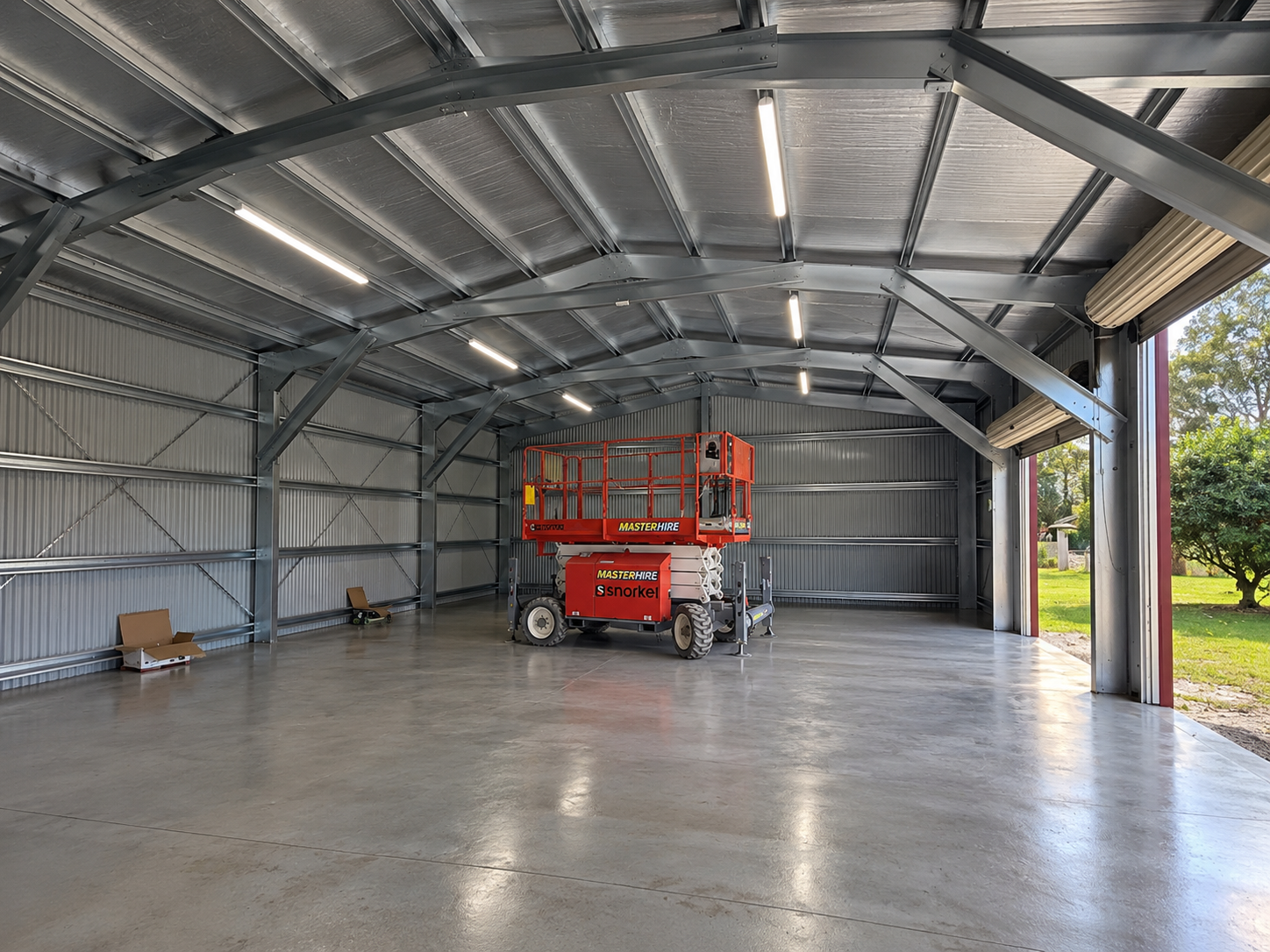
- You need specific internal clearances, such as height for a vehicle hoist or a tall caravan
- You're combining uses, like vehicle storage plus a workshop or office space
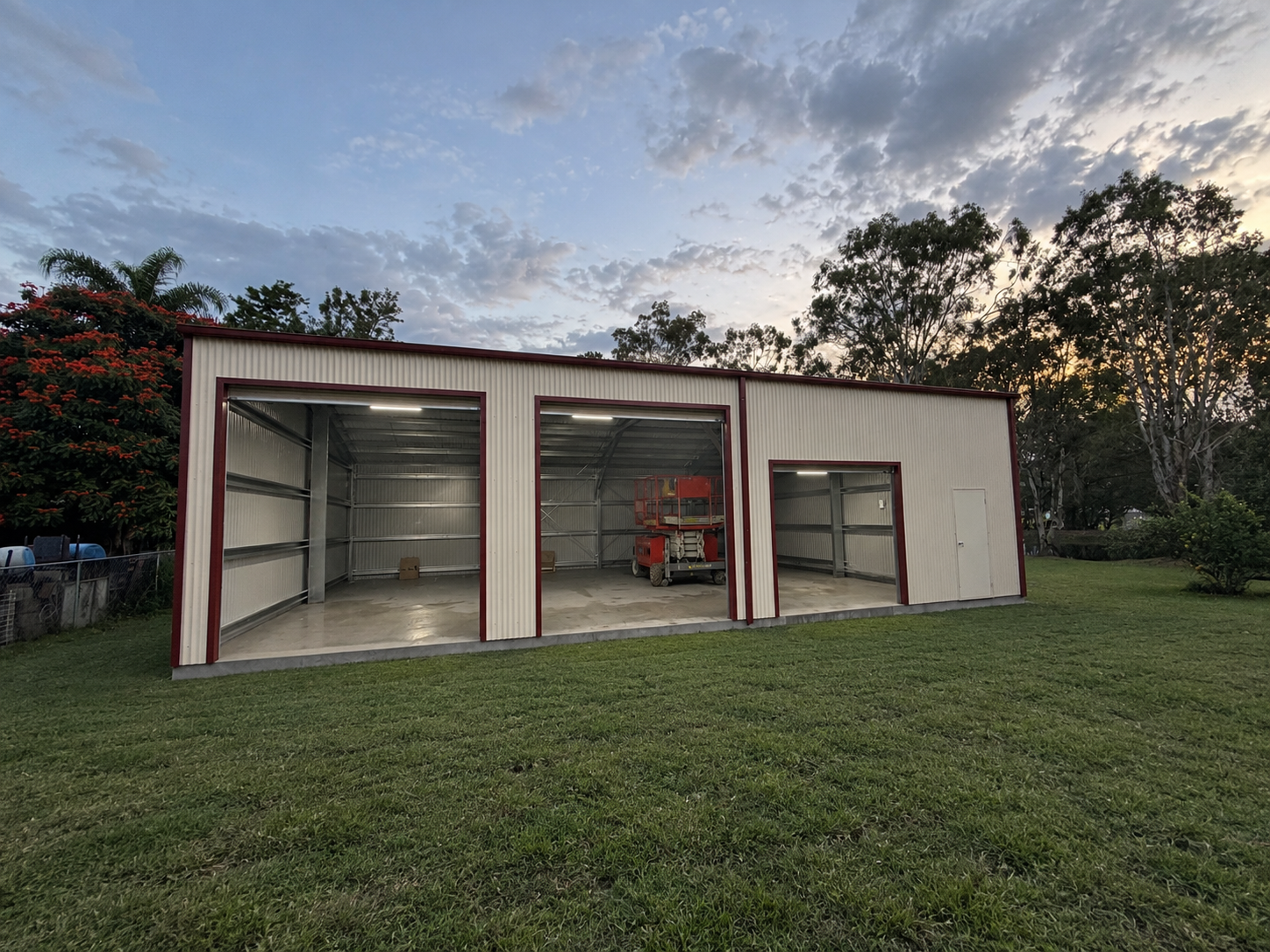
- You want particular door positions, extra personal access doors, or mezzanine storage
- You're planning for future expansion and want the structure designed with that in mind
Custom design generally takes more time upfront, since the layout, engineering, and specification are worked through with you rather than selected from a list. For sites or uses with any complexity, that extra time at the planning stage usually pays off in a shed that actually works the way you need it to.
Cost considerations
It's a common assumption that kits are always cheaper and custom always costs more. That's not a fixed rule. A kit that doesn't quite fit your site may need additional site works, retaining, or modifications that add cost back in. A well-designed custom shed built to suit the site from the start can avoid some of those extra costs. The best way to compare is to get a proper quote on both, based on your actual block and brief.
Already bought a kit? We can still help
If you've already purchased a shed kit and just need it installed, Archon Sheds offers installation-only services for buildings you've sourced yourself. You don't need to buy the shed through us to get a proper, professional installation. We also offer full supply and installation for custom designs if you're starting from scratch.
How to decide
A simple way to approach the decision: if your needs are straightforward and your site is flat and accessible, a kit is worth considering. If your site has any complexity, or your use case is specific, a custom design is likely to serve you better long term.
Not sure which option suits your property? Call Archon Sheds on 0408 881 497 or get in touch for a no-obligation chat about custom design or installation of a shed you've already bought.
Get a free quoteFrequently asked questions
Does Archon Sheds sell shed kits?
Archon Sheds focuses on supply and installation of custom sheds, as well as installation-only services for buildings customers have already purchased elsewhere. We don't offer a supply-only kit service.
Is a custom shed always more expensive than a kit?
Not necessarily. Cost depends on size, site conditions, and specification. A kit that needs extra site works to fit an awkward block can end up costing more overall than a well-planned custom design. Get a quote based on your actual site to compare properly.
Can I modify a standard shed kit design?
Some modification is often possible, such as door placement or minor size changes, but kits are generally limited to the manufacturer's available configurations. For more significant changes, a custom design gives you more control.
Will I need council approval either way?
Most sheds, whether kit or custom, require some form of council approval depending on size, location, and use. Requirements vary by council, so confirm with your local council or a building professional before you commit to a design.