4 October 2026
What shed insulation actually does
Insulation slows the transfer of heat through the roof and walls. In a Queensland summer, that means the inside of the shed stays closer to the outside morning temperature for longer, instead of climbing steadily as the sun hits the steel. In winter, it works the other way, helping the shed hold warmth overnight. It also has a secondary benefit: it dampens noise from rain on a steel roof, which matters if you spend time working inside.
When insulation is worth it
Not every shed needs it. Think about how the space will actually be used before deciding.
- Workshops where you spend hours at a bench, especially in the middle of the day
- Any space you plan to heat or cool, even with just a fan or portable unit
- Studios, home offices or man caves built into a shed structure
- Storage of heat-sensitive items such as paint, chemicals, electronics or timber that can warp
- Sheds housing a vehicle or equipment you want to keep out of extreme temperature swings
If the shed is purely for storing a trailer, mower and garden gear, insulation is a nice-to-have rather than essential. The building will still do its job without it.
Panel systems vs blanket insulation
There are two broad approaches used in shed construction, and each has a different feel and cost profile.
Insulated panel systems
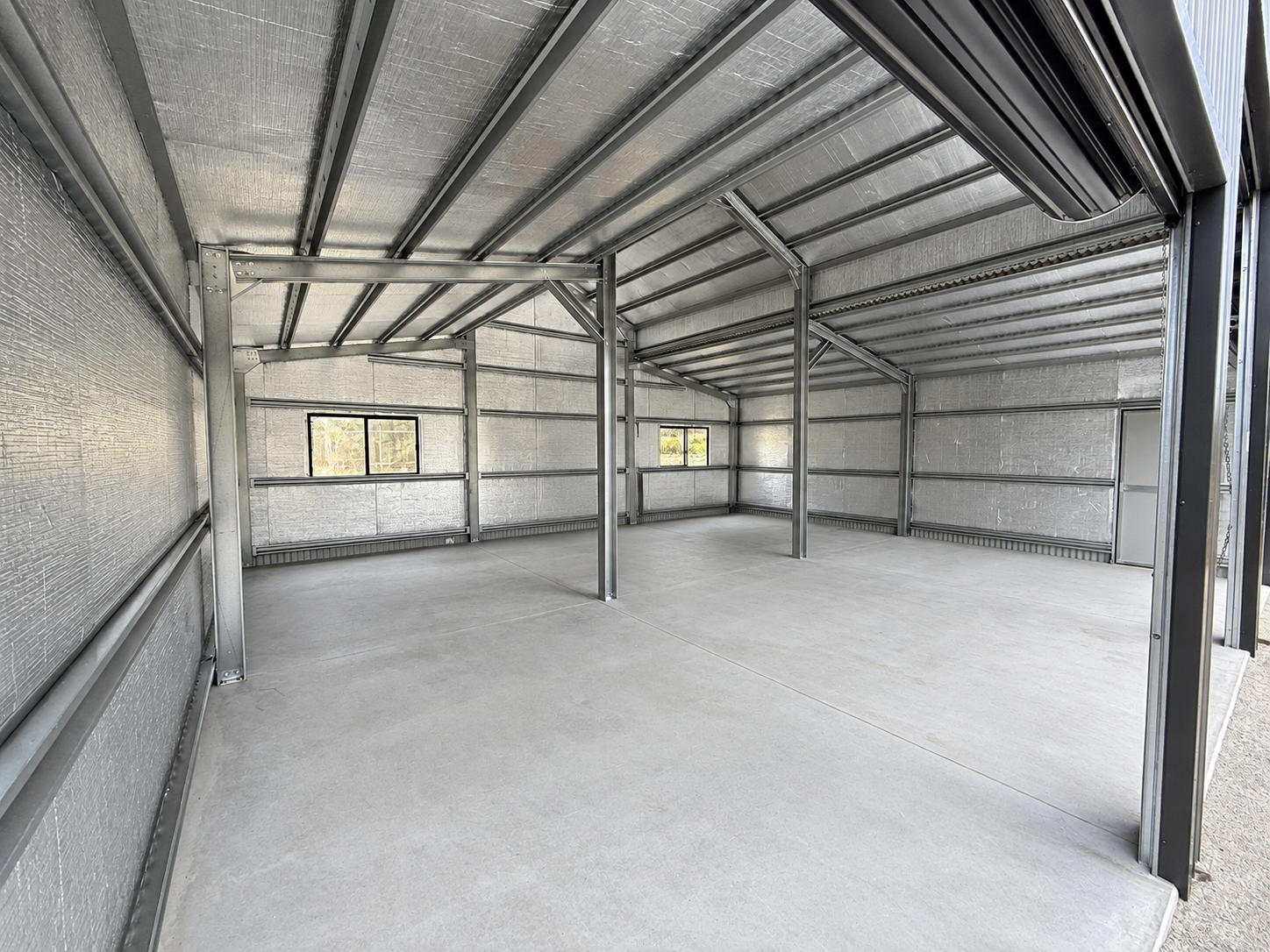
These use a core sandwiched between two layers of sheeting, installed as part of the wall or roof build-up. They give a cleaner internal finish and tend to suit workshops, offices or living-adjacent spaces where appearance and a tight building envelope matter.
Blanket (reflective foil or bulk) insulation
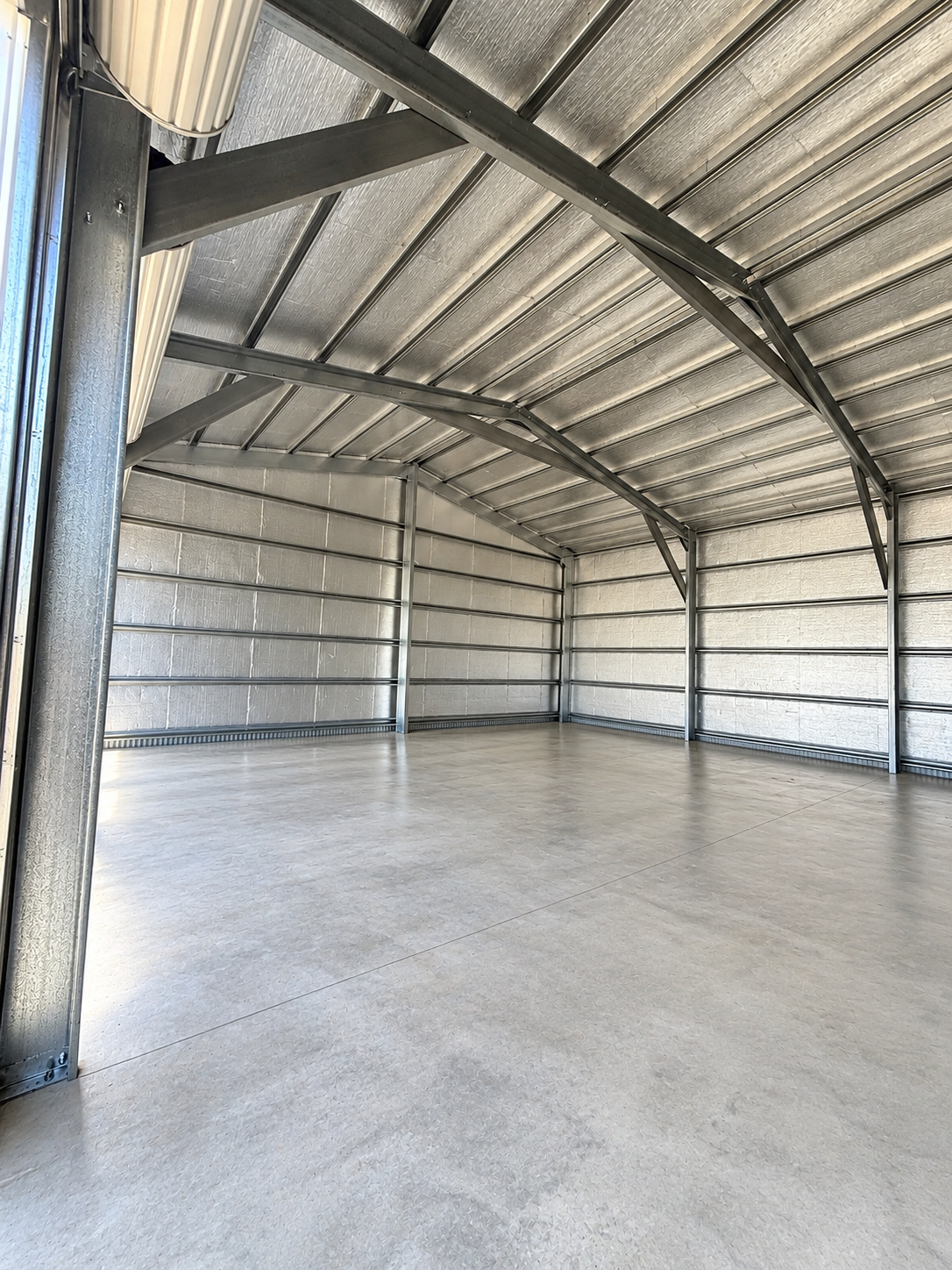
This is fitted between the frame and the external sheeting, often with a reflective foil facing visible from inside unless it is covered with an internal lining. It is a common, cost-effective way to add thermal performance to a standard steel shed without changing the build method significantly.
The right choice depends on your budget, how the shed will be used, and whether you want an internal lining over the top. We can talk you through the options that suit your project rather than a one-size-fits-all answer.
Ventilation and condensation matter just as much
Insulation on its own does not stop condensation. Steel sheds can sweat on the underside of the roof when warm, moist air meets a cool surface overnight, particularly with a change in temperature. Good ventilation, whether through vents, whirlybirds, gaps under eaves or openable windows, works alongside insulation to manage this. If you insulate without thinking about airflow, you can end up trapping moisture rather than solving the problem.
Roof colour plays a part too
Lighter Colorbond colours reflect more heat than darker ones. This will not replace insulation, but it is a simple, no-cost decision that works in the same direction. If heat is a real concern for your shed's use, a lighter roof colour combined with insulation and decent ventilation gives you the best overall result.
Getting the right setup for your shed
The best approach depends on how you will use the building, your local conditions and your budget. There is no single right answer for every shed. We look at your plans for the space and recommend an insulation and ventilation setup that matches, rather than defaulting to the same specification for every job.
Want advice on insulating your shed for Queensland conditions? Call Archon Sheds on 0408 881 497 to talk through your project.
Get a free quoteFrequently asked questions
Does every shed need insulation?
No. If the shed is used for basic storage, insulation is optional. It becomes more worthwhile for workshops, offices or any space where you spend time or store heat-sensitive items.
Can insulation be added after the shed is built?
In some cases it can be retrofitted, but it is generally easier and more effective to plan for it during construction, especially with panel systems. Talk to us early if insulation is on your mind.
Will insulation stop my shed from sweating?
Insulation helps, but ventilation is just as important for managing condensation. The two work together, so we consider both when planning your shed.
Does roof colour really make a difference?
Yes, lighter colours reflect more heat than darker ones. It is a simple factor to consider alongside insulation if keeping the shed cooler is a priority.