
10 October 2026
Different structures, different jobs
A shed is usually about storage and work: equipment, vehicles, a workshop or a hobby space. A garage is built around cars and secure parking. Outdoor living areas such as decks, patios and paved entertaining spaces are about how you use the yard day to day. On a residential block they often share the same space, so the position and size of one affects the others.
Planning them together means the shed is not blocking the view from the deck, the driveway reaches the garage without cutting through the lawn, and paths link everything in a way that makes sense.
Choosing the right shed for your property
Sizes and configurations
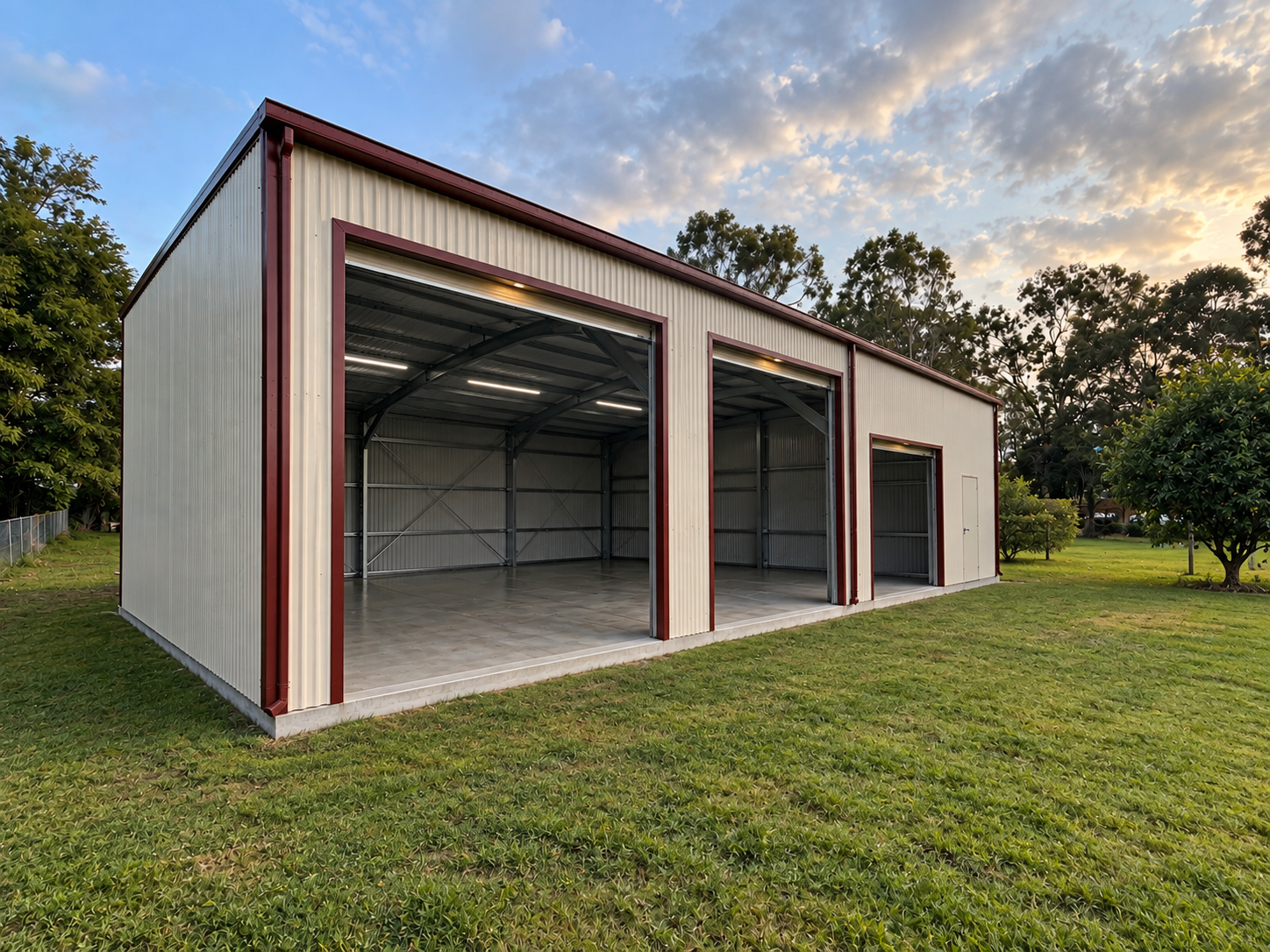
Start with what the shed needs to hold, then add room to move around it. A single-bay shed suits a car or a small workshop. Two and three bay layouts give space for vehicles plus storage, and a raised central bay can take a caravan or boat. Our guide on what size shed to build walks through this in more detail.
Storage sheds and residential workshops
A storage shed needs good access and shelving space. A workshop needs more: natural light, power, a personal access door, ventilation and room for a bench and machinery. If you plan to spend time in it, insulation makes a real difference in a Queensland summer.
Garage sheds and vehicle storage
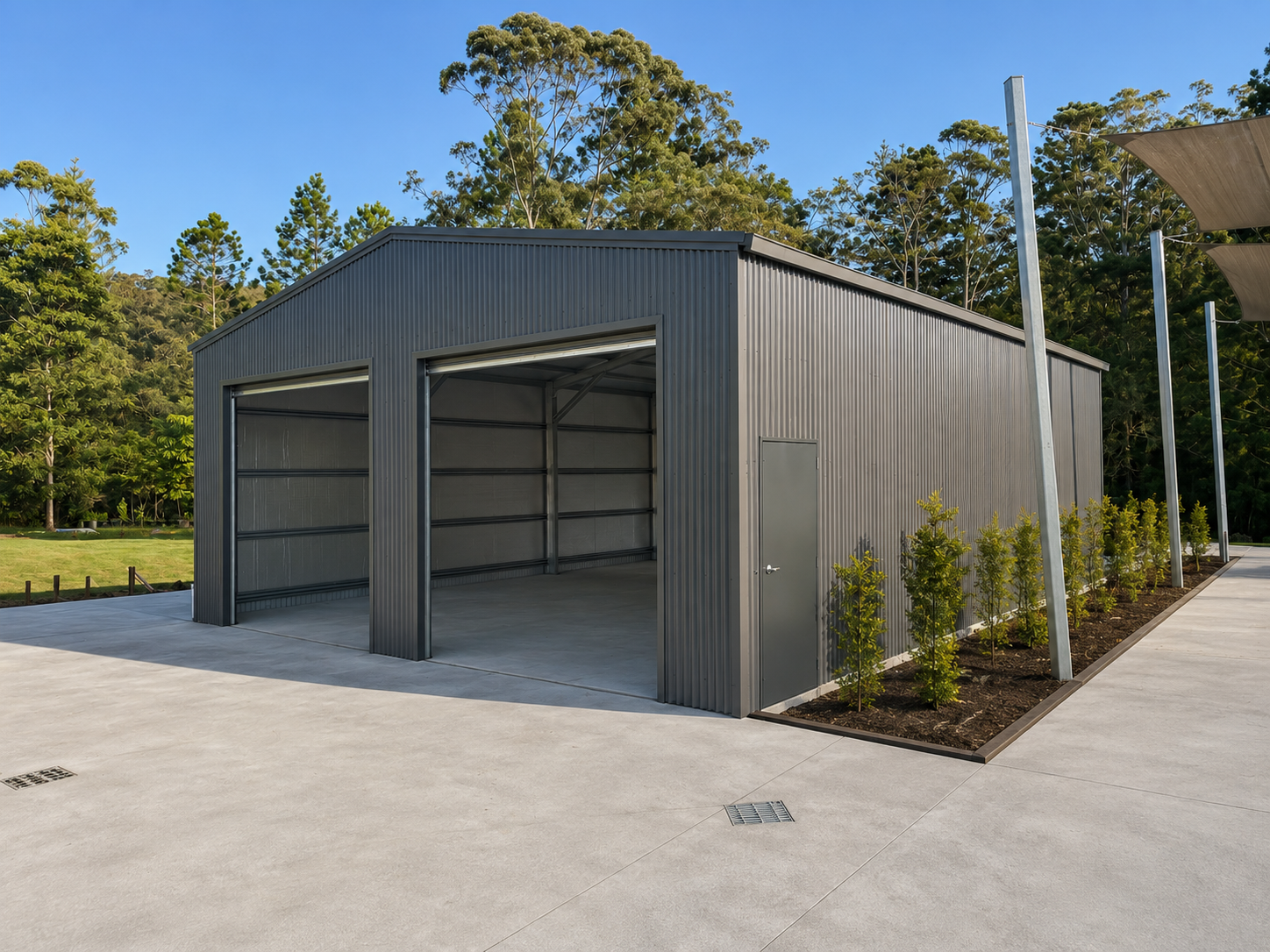
Garage sheds protect cars, trailers and boats from sun, hail and storms. Door height and width matter most. Measure your tallest vehicle, including roof racks, and allow extra clearance. Our garages page covers the options for single, double and larger garage sheds.
Customisation options
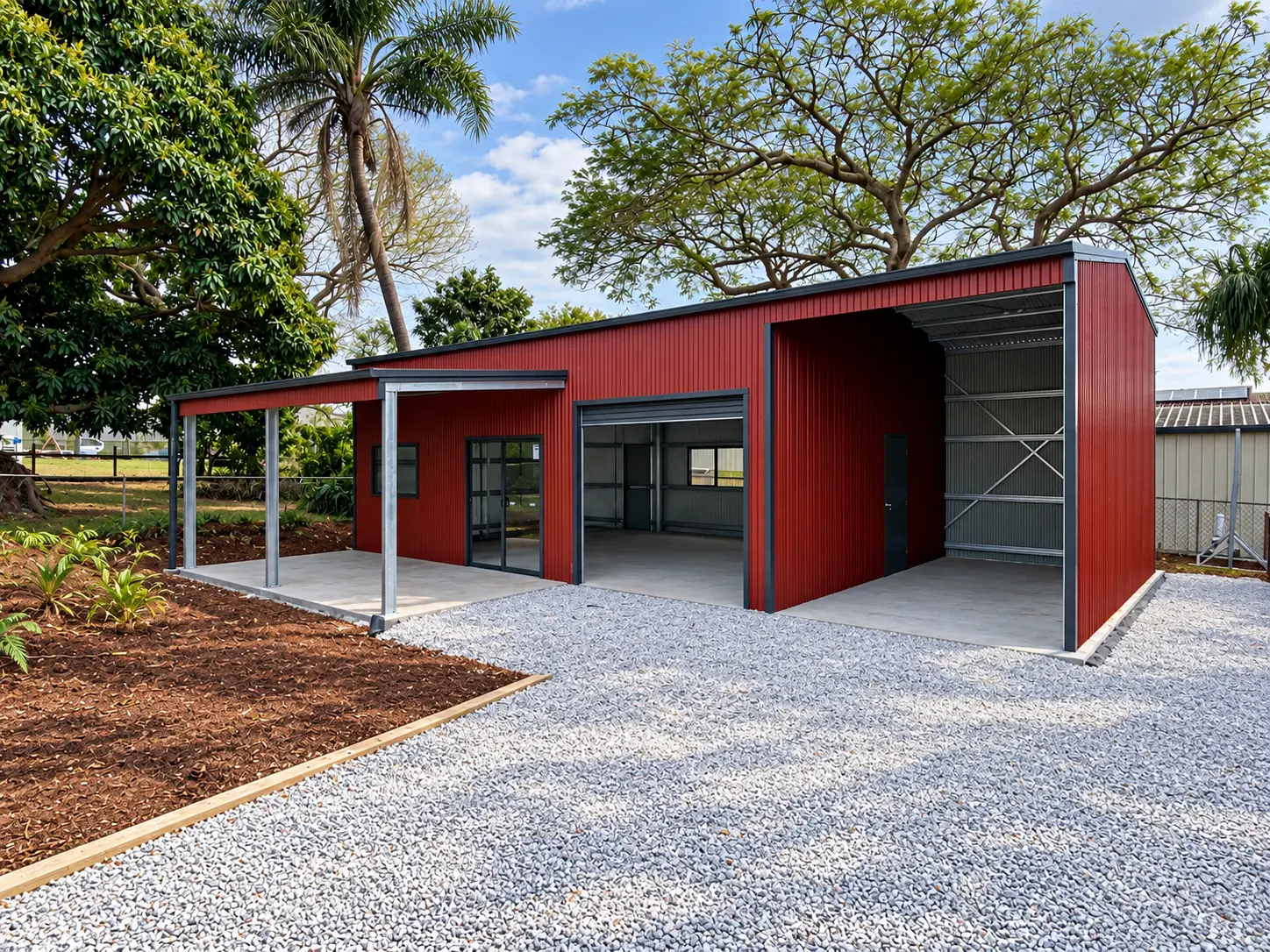
Custom sheds let you choose the dimensions, roof pitch, door positions, windows, awnings and colours to suit your block and your house. A shed built to fit the way you use it is usually more useful than a standard kit that almost fits.
How a well-designed shed improves the way your property works
The most obvious benefit is storage. Mowers, bikes, camping gear and tools move out of the house and garage, and the home feels less cluttered. Equipment lasts longer when it is kept dry and out of the sun.
- Practical storage that keeps gear organised and easy to reach.
- Protection for vehicles, machinery and tools from weather.
- Less clutter in the house, garage and on verandahs.
- A dedicated workspace for hobbies, repairs or a home business.
A separate workspace also keeps noise and dust away from the house, which matters if you use power tools or work early or late.
Complementing your shed with outdoor living improvements
Once storage is sorted, the rest of the yard becomes easier to enjoy. Clearing equipment out of the backyard frees up space for entertaining, gardens and play areas. Landscaping and pathways can tie the shed into the yard so it looks like part of the property rather than an add-on.
Timber and composite decking
Decking is one of the most common ways to extend living space outdoors. Timber has a natural look but needs regular oiling or staining. Composite boards need less upkeep and resist rot and insects, though they can get hot in direct sun. Choose a material that suits how much shade the area gets and how much maintenance you are happy to do.
Entertaining areas and connecting to the home
The best outdoor areas flow straight from the house, usually off the kitchen or living room. Keeping floor levels close and adding cover helps the space get used all year. A covered area attached to a shed can also work well as a second entertaining space near a workshop or pool. Our patios page explains covered outdoor options we build.
For homeowners planning a complete backyard improvement, services such as those offered by Orange Projects Deck Builders Gold Coast can complement a new shed with a practical outdoor entertaining area.
Presentation and local weather
Matching colours between the shed, house and outdoor areas makes the whole block look more considered. In South East Queensland, materials need to handle strong sun, humidity, heavy summer rain and storms. Near the coast, salt air is also a factor in choosing finishes and fixings.
Planning your shed installation
Good planning before construction saves time and cost later. Things to look at early include:
- Site preparation: clearing, levelling and any earthworks needed.
- Access: room for delivery vehicles and equipment to reach the site.
- Foundations: the slab or footings suited to the shed size and soil.
- Drainage: where roof water and surface water will go.
- Positioning: setbacks, sun, prevailing wind and how you will use the doors.
Many residential sheds need building approval, and the rules depend on your council, the size of the shed and where it sits on the block. Check with your local council or a building certifier before you commit. Our guide to shed council approval in Queensland explains what usually affects this.
Choosing quality materials for Australian conditions
Steel-framed sheds with Colorbond cladding are popular in Queensland because they resist termites, do not rot and hold their colour well. The frame needs to suit the wind rating of your site, which your builder should confirm. Insulation and ventilation help with heat and condensation. Maintenance is generally simple: wash down the cladding occasionally, keep gutters clear and check doors and fixings.
Long-term durability comes from getting the basics right: a sound slab, the correct frame for the site and good drainage around the building.
Why choosing an experienced shed company matters
A shed is a structural building, not just a box. Accurate measuring, the right frame and fixings for the site, and careful installation all affect how it performs over the years. An experienced builder will ask how you plan to use the space, look at access and drainage, and point out issues before they become problems.
Archon Sheds designs and builds custom residential, rural and commercial sheds across the Gold Coast and Brisbane. We offer complete supply and installation, or installation of a shed you have already purchased. You can see the range of residential sheds we build, from garage sheds to large multi-bay workshops.
Planning a shed or garage? Tell us about your block, how you will use the space and the size you have in mind, and we will come back with practical advice and a free quote.
Get a free quoteFrequently asked questions
What size shed do I need for a car and storage?
It depends on your vehicles and what else you store. A two bay layout often suits a car plus storage or a small workshop. Measure your vehicles and gear first, then allow room to move around them.
Do I need council approval for a residential shed?
Often, yes, but it depends on your council, the shed size and its position on the block. Check with your local council or a building certifier before construction.
What materials suit sheds in South East Queensland?
Steel frames with Colorbond cladding are a common choice because they handle sun, humidity and storms and resist termites. The frame should match the wind rating for your site.
Can a shed be customised to match my house?
Yes. Custom sheds can be built with your choice of size, roof pitch, doors, windows, awnings and colours so they suit your home and block.
Do you offer installation only?
Yes. Archon Sheds offers supply and installation, or installation only for a shed you have already purchased. We do not offer supply only.