
4 October 2026
Start with your largest machine
The most reliable way to size a machinery shed is to work backwards from the largest piece of equipment you own or plan to own. That means measuring actual height and width with any attachments fitted, such as a loader bucket raised to its travel position, a roll bar, an antenna, or a raised tipper tray. Many sizing mistakes come from measuring the machine body only and forgetting what sits on top of it.
Once the largest machine is accounted for, add clearance. A door that is exactly the width of the machine is a door you will clip eventually. A small margin either side makes day to day use much easier, especially when reversing in low light or wet weather.
Door height and width
- Measure height to the highest point of the machine in its tallest working position, not just parked height.
- Roller doors and panel lift doors have different clearance needs above the opening, which affects total shed height, not just door height.
- Door width should allow for mirrors, attachments and a reasonable turning angle on approach, not just the machine's body width.
Clear-span interiors matter
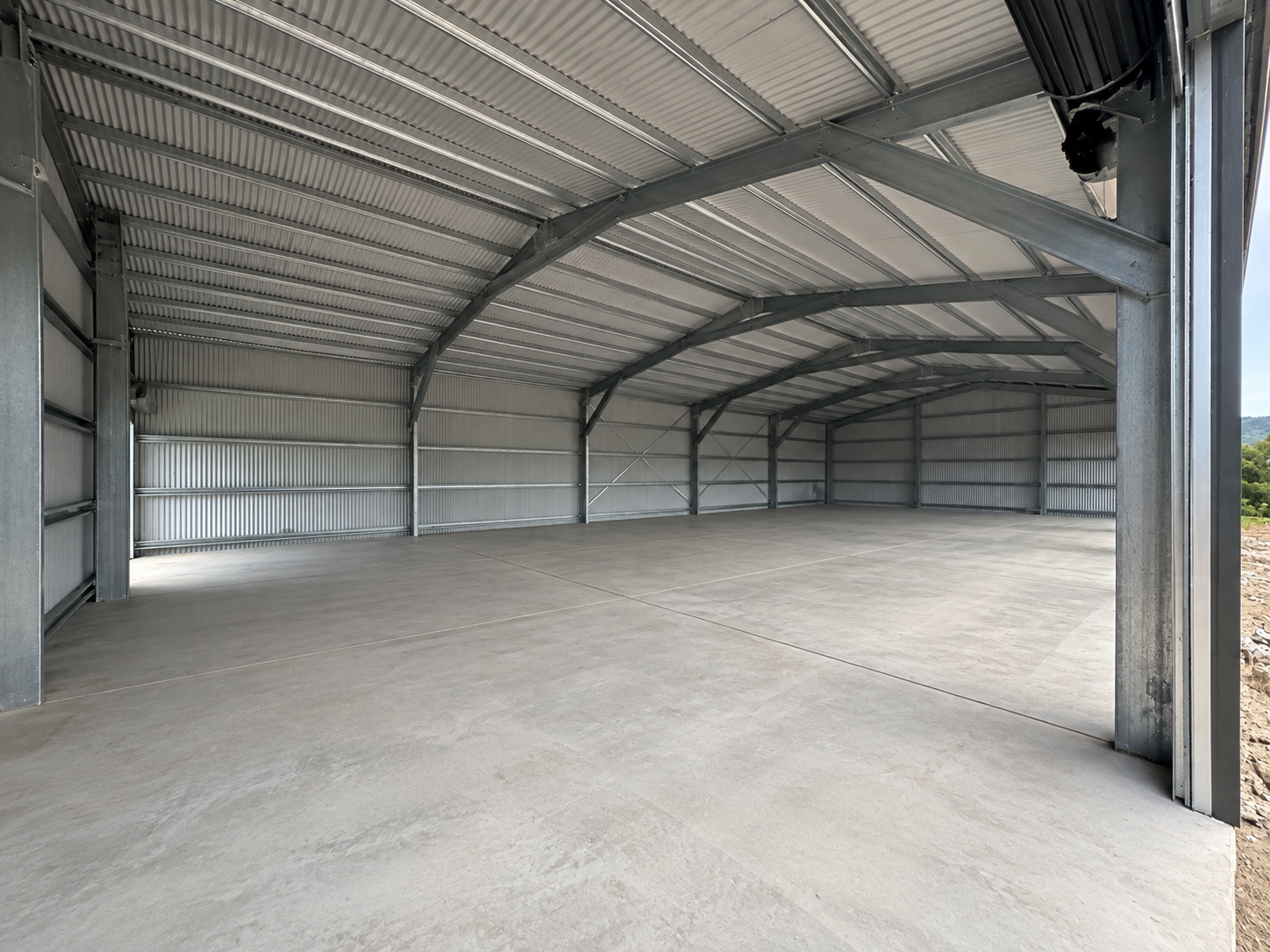
Internal posts can get in the way of machinery access, especially when manoeuvring larger equipment or multiple machines in and out of the same space. A clear-span design, where the roof structure is supported without internal columns, gives you full use of the floor space and far more flexibility if machinery or storage needs change later.
Clear-span is not always necessary for every shed, but for a dedicated machinery shed it is worth discussing early, since it affects the structural design from the start rather than something that can be added afterwards.
Floor and slab considerations
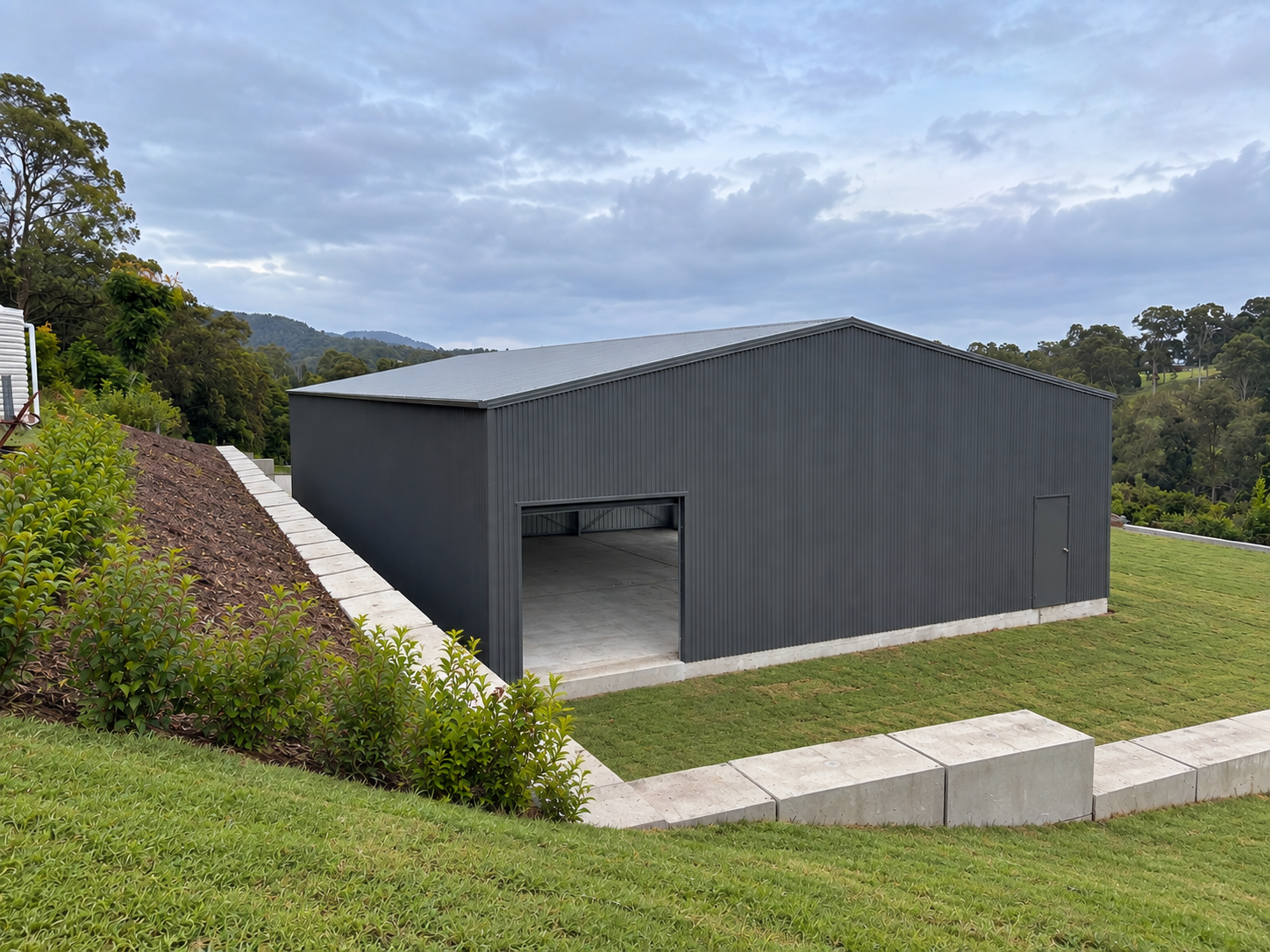
Machinery sheds take heavier point loads than a typical domestic garage, particularly from tractors, loaders and trailers. The right slab thickness and preparation depends on the specific machinery, the soil conditions on site and how the shed will be used, so this is a conversation to have with your builder rather than guessing a figure. A well-prepared base also helps with drainage, since machinery sheds often deal with mud, fuel or oil that needs to run away from the structure rather than pool against it.
Ventilation and condensation
Steel sheds can suffer from condensation, especially in Queensland's humidity, when warm moist air meets a cool roof surface overnight. For machinery storage this matters because condensation dripping onto equipment can lead to rust over time. Ventilation options such as ridge vents, whirlybirds or louvres help air move through the shed, and insulation or anti-condensation blanket under the roof sheeting can reduce the problem further. The right combination depends on the shed's size, use and how often it is opened up to air out.
Access and turning space
A machinery shed is only as good as the space around it. Before finalising a design, walk the actual approach a machine will take to get into the shed, including any turns, and check there is enough apron space to straighten up before entering. This matters more for longer machinery and trailers, which need a wider turning path than a car or ute.
- Allow for a flat, stable approach so machinery is not turning on a slope right at the door.
- Consider which direction prevailing weather comes from when deciding which way doors face.
- Think about whether multiple machines need to pass each other inside or outside the shed.
Planning a machinery shed that lasts
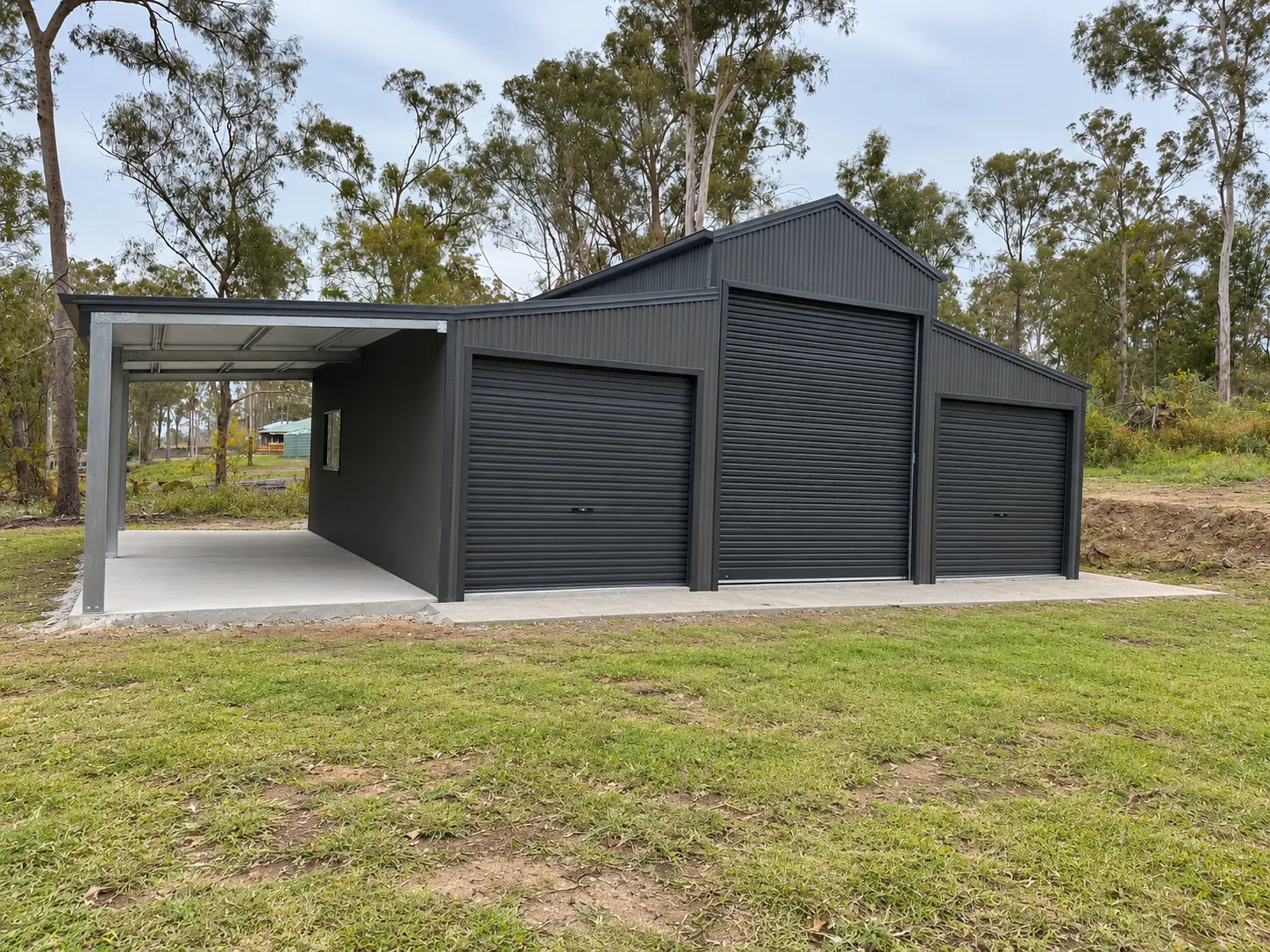
Machinery sheds are a long-term investment, and the equipment they house is not cheap to replace. Getting the size, height, floor and ventilation right from the start avoids expensive adjustments later. A custom design built around your actual machinery, site and access needs is almost always a better outcome than fitting equipment into a standard size shed and working around the limitations.
Planning a machinery shed for your Queensland property? Call Archon Sheds on 0408 881 497 or get in touch to talk through sizing, access and design.
Get a free quoteFrequently asked questions
How tall should a machinery shed be?
Height should be based on the tallest equipment you own or expect to own, measured in its tallest working position including any attachments, plus clearance for the door type. There is no single standard height, so it is worth measuring your actual machinery before deciding.
Do machinery sheds need a thicker slab than a normal shed?
Often yes, because machinery puts heavier point loads on the floor than cars or general storage. The right thickness depends on the machinery, soil conditions and shed use, so this should be assessed for your specific site rather than assumed.
Can a machinery shed be extended later if I buy bigger equipment?
This depends on the original design and site constraints. Discussing future equipment plans during the design stage makes it easier to build in extension options from the start.
Is ventilation really necessary in a machinery shed?
Ventilation reduces condensation build-up, which can otherwise lead to rust on stored equipment over time, particularly in Queensland's humid climate. The right ventilation approach depends on the shed's size and how it is used.