4 October 2026
Think in bays, not square metres
A useful way to size an acreage shed is to think in bays rather than a single floor area figure. A bay is roughly the space needed for one vehicle, one machine, or one storage zone, plus enough room to walk or work around it. Three bays side by side might cover a ute, a tractor and a workshop area. Breaking the shed down this way makes it easier to picture how it will actually be used, rather than just picking a number that sounds big enough.
Once you know roughly how many bays you need, width and length follow naturally. This is also where custom sizing earns its keep. Standard modules rarely line up exactly with what a property owner needs, so building to the actual bay count and dimensions avoids wasted space or a shed that is a metre short where it matters.
Why height matters as much as floor area
Property owners often focus on length and width and treat height as an afterthought. On acreage, height is usually the thing that determines whether the shed is actually useful. A shed that is wide enough for a tractor but too low for the roll bar, or too tight for a tip truck tray to lift, is a shed that does not do its job.
- Roof height needs to clear the tallest item you own, plus the tallest item you are likely to own in the next five to ten years.
- Door height needs to allow for aerials, roof racks, loader buckets and raised trays, not just the vehicle body.
- Clear internal height matters more than eaves height if you plan to use any kind of hoist, mezzanine or overhead storage.
Plan for the second vehicle or implement
A common regret with acreage sheds is building for what you own today and not what you are likely to add later. Acreage living tends to accumulate equipment: a second vehicle, a boat, a trailer, an implement for the tractor, or a workshop that grows over time. It is far cheaper to build a bay or two of extra width now than to add a second shed in a few years.
If budget does not stretch to the full size you want immediately, it is worth discussing a design that allows for a future extension, so the shed can grow with the property without starting from scratch.
Clearances and movement around the shed
Sizing is not just about what fits inside the shed. It also covers how vehicles and machinery get in and out, and how much room is needed to turn, reverse or manoeuvre an implement without clipping a wall or a door frame.
- Door width needs clearance either side of the widest vehicle or machine, not just its exact width.
- Turning circles for trailers and larger machinery often need more apron space in front of the shed than people expect.
- Internal clearance between bays matters if you need to walk around a parked vehicle or open doors fully.
Common acreage shed layouts
There is no fixed standard for acreage sheds, but some layout approaches come up often because they suit how rural properties are used. These are starting points for a conversation, not fixed templates.
- Machinery bay plus enclosed workshop, with the workshop bay fully lined and the machinery bay left open for airflow and easy access.
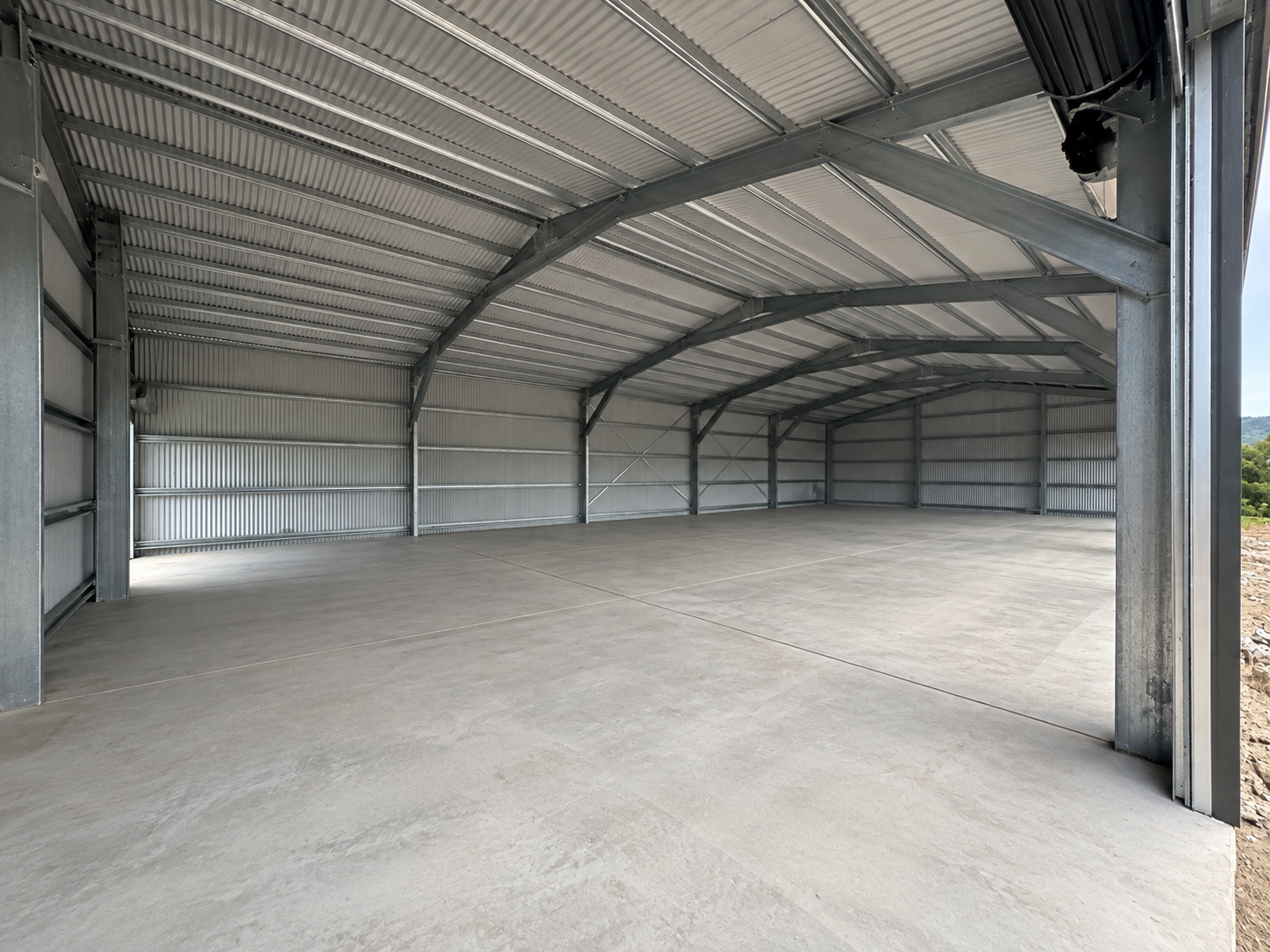
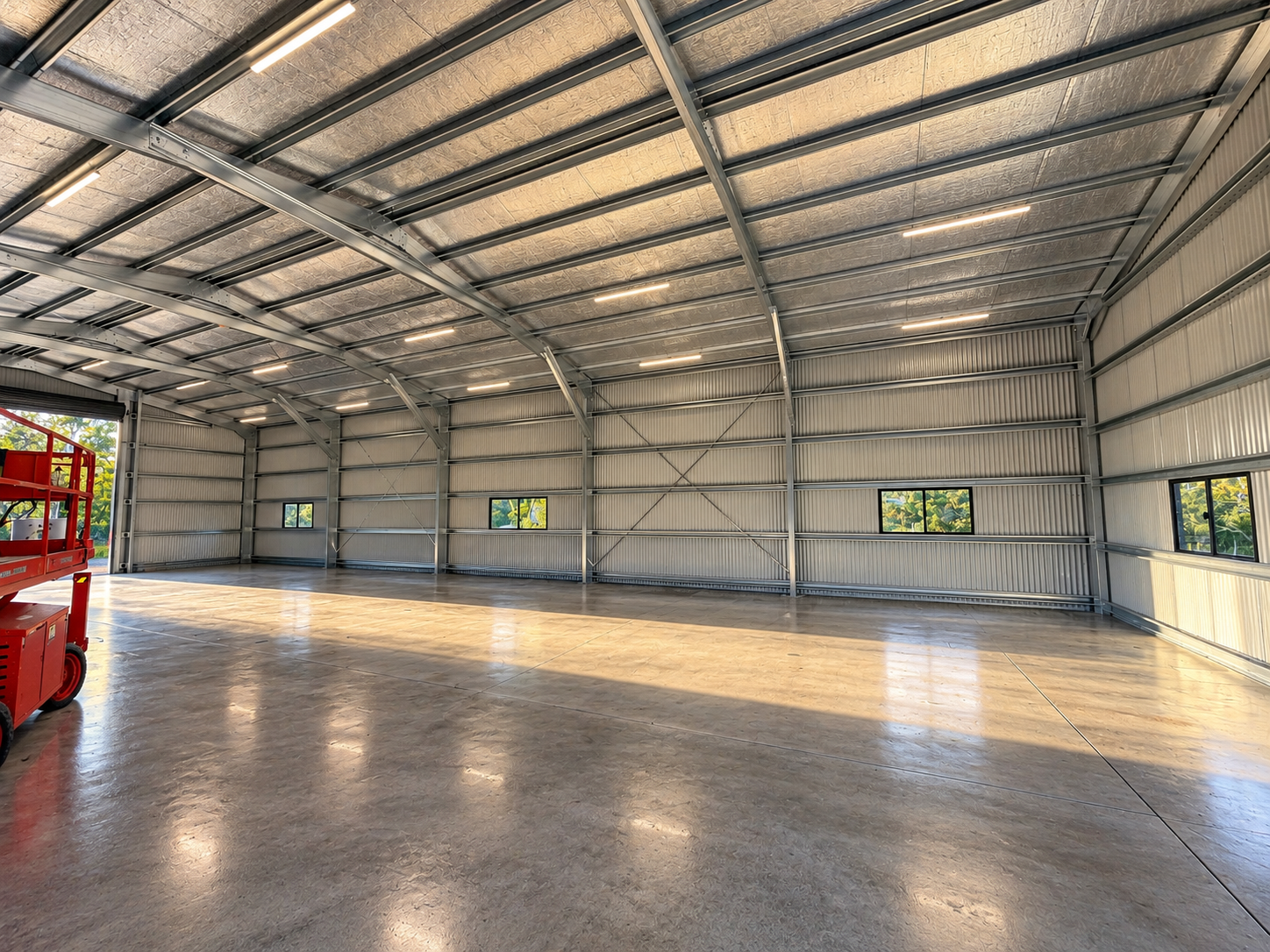
- Multi-bay machinery shed with no internal walls, giving a clear span that allows vehicles and equipment to be rearranged as needs change.
- Combined shed and carport layout, where an open-sided section covers less critical equipment while an enclosed section protects tools, feed or machinery from weather and pests.
Getting the size right for your property
The right shed size depends on your land, your equipment, your budget and how your property is likely to be used in the years ahead. Rather than working backwards from a standard size, it is worth starting with a list of what needs to be stored, how it is used, and what might be added later. A custom design can then be built around that list rather than forcing your equipment to fit a predetermined shape.
Not sure what size shed your property needs? Call Archon Sheds on 0408 881 497 to talk through your site and equipment, or get in touch online for a custom design.
Get a free quoteFrequently asked questions
What is the biggest mistake people make sizing an acreage shed?
Sizing for current equipment only and not allowing for future additions like a second vehicle, a boat or extra machinery. Building in some extra width or a future extension option usually costs far less than adding a second shed later.
Do I need council approval for a large acreage shed?
Approval requirements vary depending on the size, location and council area. It is best to check with your local council or get advice before finalising a design, since this affects both size and placement on the property.
Can Archon Sheds build a custom size rather than a standard kit size?
Yes. Archon Sheds designs and supplies custom-sized sheds built around the specific equipment, layout and site rather than fixed standard dimensions.
Should I build one large shed or several smaller ones?
This depends on the site and how equipment is used day to day. One larger shed with multiple bays is often more efficient to build and use, but a separate smaller shed can make sense for noisy or hazardous activities, or when sheds are needed in different parts of the property.