
4 October 2026
Start with what needs to fit, and move
Machinery and vehicles need more than just floor space, they need room to manoeuvre in and out safely. Before fixing a shed size, map out the largest equipment you currently own or plan to own, including turning circles and the clearance needed around attachments such as slashers, forks or trailers.
- Tractors and attachments
- Utes, trucks or trailers
- Boats or caravans
- Quad bikes or side-by-sides
- Hay, feed or equipment storage
It is common to underestimate how much clearance is needed around machinery, particularly for turning and reversing. Giving yourself extra room now avoids a frustrating, tight shed later.
Height for trucks and implements
Height requirements vary a lot depending on what you are storing, from standard utes through to trucks, tipper bodies or raised implements. Rather than guessing at a height, work out the tallest item you need to store or drive in, add clearance for safety, and use that as your starting point. Confirm any specific height or engineering requirements with your builder, since these can be affected by your site and local regulations.
Multiple bays and drive-through access
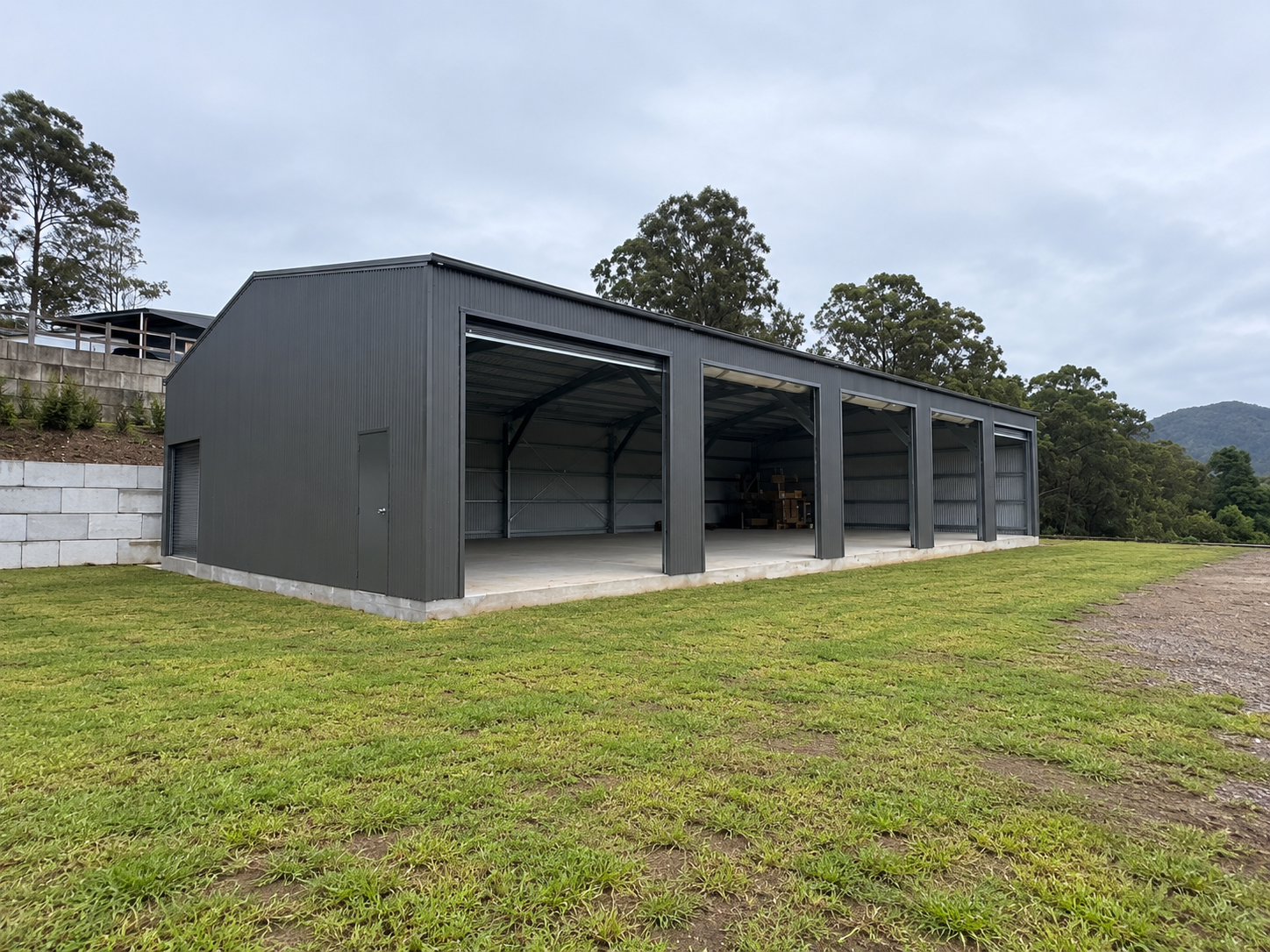
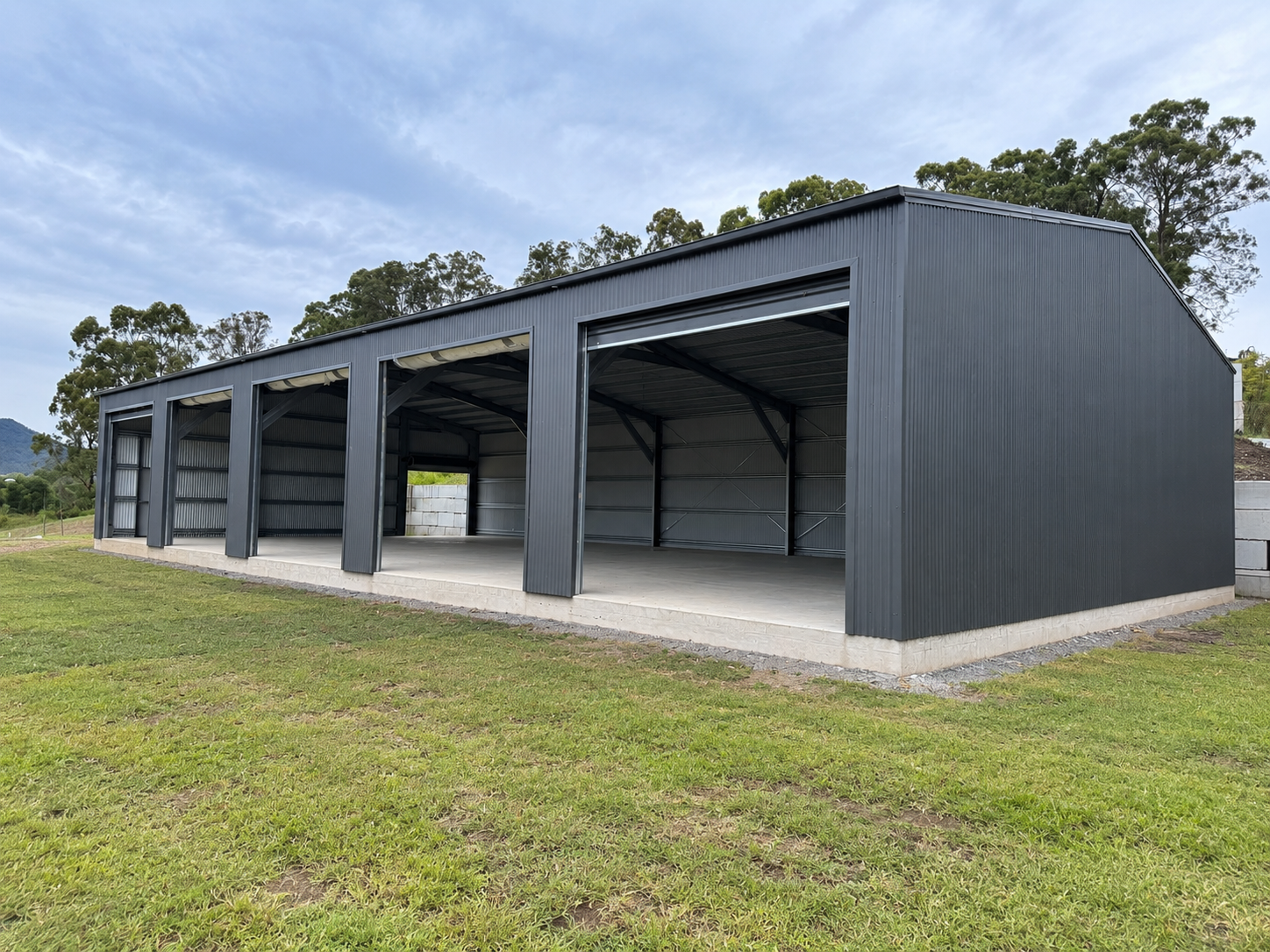
Many acreage sheds are built with multiple bays so different functions, machinery storage, a workshop, general storage, can be kept separate without being cramped into one open space. Drive-through access, with a door at each end of a bay, is particularly useful for larger vehicles or equipment that you do not want to reverse in and out of a single entry point.
Power and water
If the shed will be used as a workshop or for anything beyond basic storage, plan power requirements early, including the number of circuits and outlet locations. Water tanks are also commonly integrated with acreage sheds, using the roof catchment for stock water, garden use or general property needs. Both are far easier to plan for during construction than to retrofit afterwards.
Building in room to expand
Needs on an acreage property tend to grow, whether that is more machinery, an expanding business, or additional storage. It is worth discussing future expansion with your builder at the design stage, even if you are not building it all now. This might mean positioning the shed to allow for an additional bay later, or choosing a structural approach that makes extensions easier down the track.
Site and access considerations
Acreage blocks often have more flexibility on placement than suburban blocks, but that comes with its own considerations: distance from the house, access roads, slope, drainage and proximity to existing infrastructure like power and water. These factors affect both the cost of the build and how practical the shed is to use once it is finished.
A custom design for a working property
Acreage sheds rarely suit a standard off-the-shelf size. A custom design lets you match bay sizes, door positions, height and layout to your actual machinery and workflow, rather than adapting your operation to fit a generic building.
Planning a shed for your acreage property? Call Archon Sheds on 0408 881 497 to design one around your machinery and workflow.
Get a free quoteFrequently asked questions
How many bays should an acreage shed have?
It depends on what you need to store and separate. Multiple bays are common for keeping machinery, workshop space and general storage apart, but the right number comes down to your specific needs.
What height do I need for a machinery shed?
Work this out from the tallest vehicle or implement you need to store or drive in, plus clearance. Confirm the final height with your builder, since site and regulatory factors can affect what is achievable.
Can a water tank be added to an acreage shed?
Yes, this is common and uses the shed's roof catchment. It is best planned at the design stage so plumbing and tank placement are integrated properly.
Should I build bigger than I need now?
It is worth considering, especially on acreage where needs tend to grow. Discuss future expansion with your builder so the design can allow for it where practical.