10 October 2026
Why steel sheds get condensation
Condensation forms when warm, moist air touches a surface that is colder than the air. Steel roof sheeting loses heat quickly at night, especially under a clear sky. By early morning the underside of the roof can be colder than the air inside the shed, and moisture in that air turns into droplets. When enough builds up, it drips onto whatever is stored below.
South East Queensland's humidity makes this more common, particularly in the cooler months and in low-lying or coastal areas. A shed with a concrete slab that was poured recently, wet vehicles parked inside, or a lot of plants nearby will also hold more moisture in the air.
Why sheds get so hot
Bare steel absorbs solar heat and radiates it into the building. With little airflow, that heat has nowhere to go. Darker roof colours absorb more heat than lighter colours, and a shed with closed doors and no vents will trap warm air under the roof all afternoon.
Roof insulation
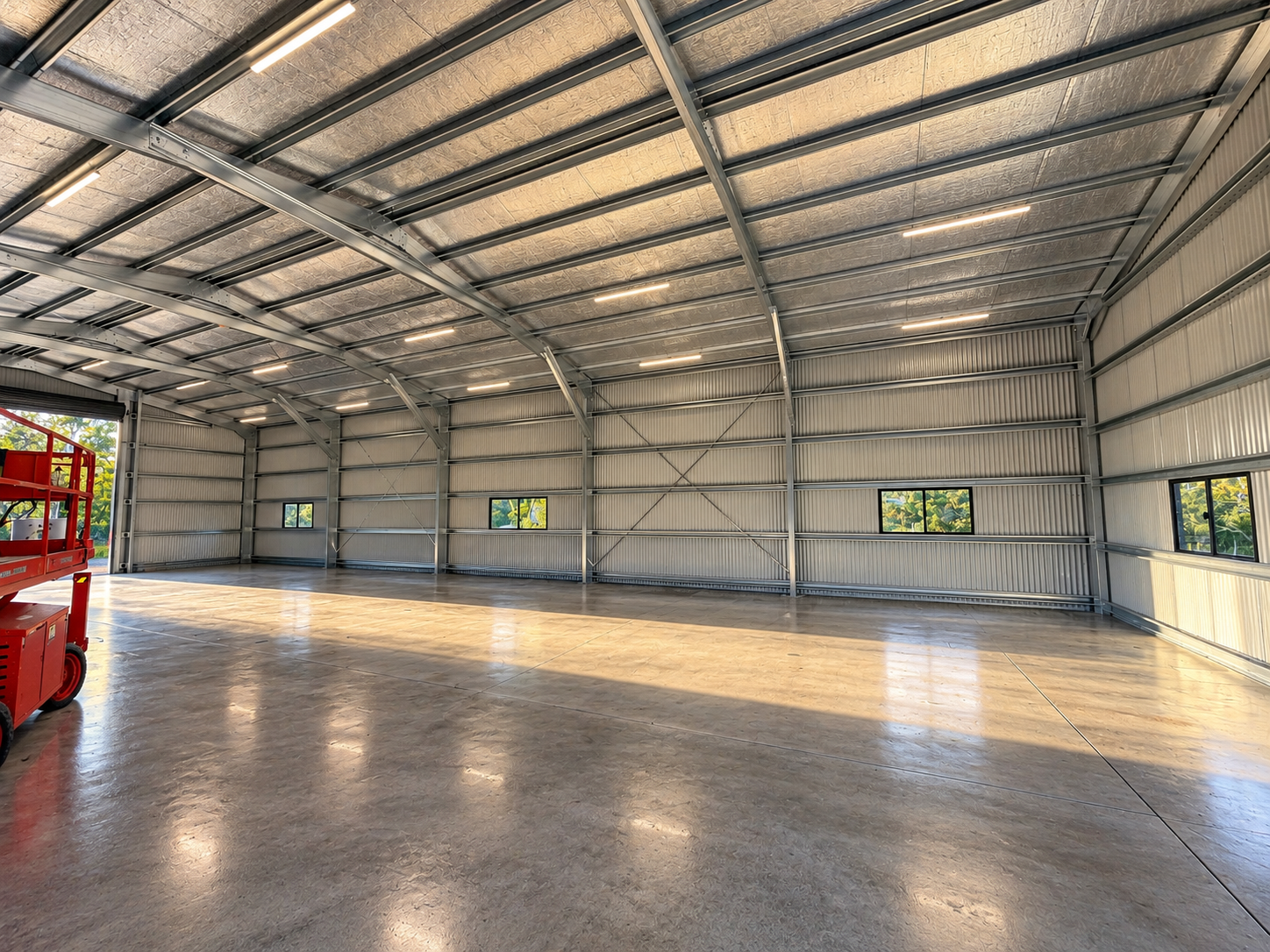
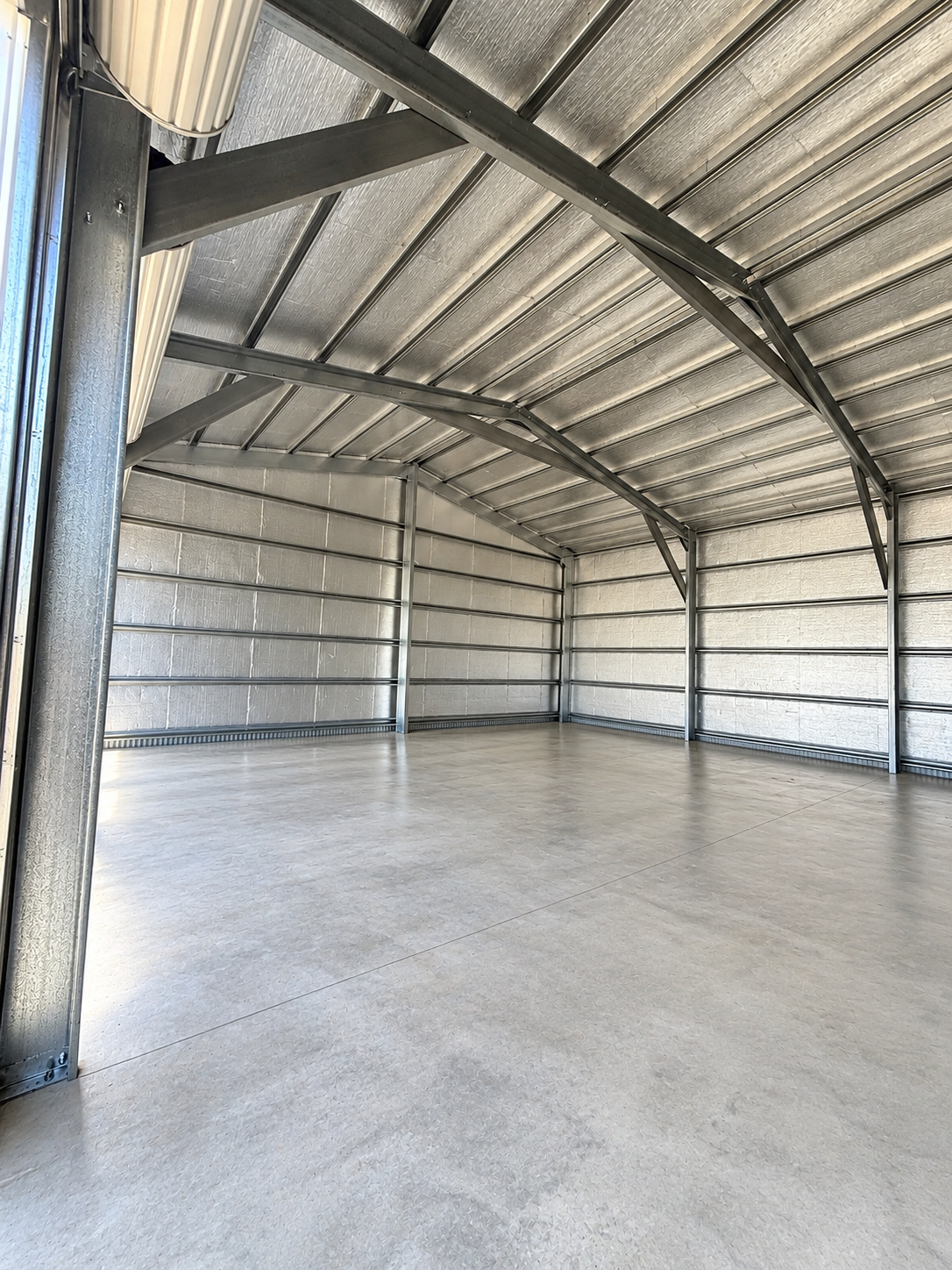
Insulation under the roof sheeting is the single most effective step against both condensation and heat. A blanket with a foil facing is commonly installed directly under the roof sheets during construction. It keeps the underside surface closer to the inside air temperature, which reduces condensation, and it slows radiant heat coming through the roof.
Retrofitting insulation into an existing shed is possible but more awkward and usually more expensive, because it is no longer simply laid out as the sheets go on. If you are planning a new shed, it is worth pricing insulation from the start. Our guide to shed insulation in Queensland explains the main options.
Wall insulation
Walls matter less than the roof for condensation, but insulating them helps if the shed will be used as a workshop, home gym or office, or if the western wall takes the afternoon sun.
Ventilation
Insulation slows heat and condensation; ventilation removes the warm, moist air. The two work best together. Common options include:
- Roof ventilators (whirlybirds), which use wind and rising warm air to draw air out through the roof.
- Ridge vents along the top of the roof, which let hot air escape at the highest point.
- Wall vents or louvres low on the walls, which let cooler air in to replace the air leaving through the roof.
- Windows and personal access doors placed to allow cross flow when they are open.
Roof vents work much better when there is a way for replacement air to enter lower down. A shed with whirlybirds but closed doors and no wall vents will not move much air.
Other practical steps
- Choose a lighter roof colour if heat is a priority and it suits the property and any council or estate guidelines.
- Make sure the slab has a suitable vapour barrier underneath, which your builder and slab installer will normally include.
- Keep good drainage around the shed so water does not pool against the walls or slab edge.
- Avoid storing wet gear or running unflued gas heaters inside a closed shed.
- Open doors on dry days to let the building air out.
Planning it in from the start
If the shed will hold a car you care about, machinery, timber, paperwork or anything that dislikes moisture, treat insulation and ventilation as part of the core design rather than an optional extra. It is a modest part of the overall cost of a new shed, and it makes the building far more comfortable and useful.
Want a shed that stays drier and cooler? Talk to Archon Sheds on 0408 881 497 about insulation and ventilation options for your build on the Gold Coast or in Brisbane.
Get a free quoteFrequently asked questions
Why is my shed roof dripping water?
That is usually condensation. The steel roof cools overnight and moisture in the air condenses on its underside. Roof insulation and better ventilation are the usual solutions.
Do whirlybirds stop condensation?
They help by removing warm, moist air, but they work best combined with roof insulation and low-level vents that let fresh air in.
Can insulation be added to an existing shed?
Yes, but it is generally harder and dearer than installing it during construction.
Does roof colour affect shed temperature?
Yes. Lighter colours reflect more heat than darker ones, although insulation and ventilation have a bigger overall effect.